
How to Use Employee Engagement Surveys to Close Misalignment and Strategy-Execution Gap
Move beyond sentiment and use employee engagement surveys to detect and fix execution misalignment.
Here’s a step-by-step guide to closing the strategy-execution gap with employee engagement surveys.

How confident are you that your teams interpret your strategy the same way you do?
You announce the quarterly priorities, align leadership around them, and communicate a clear plan to your teams. At that point, everything appears to be moving in the right direction.
Within a few weeks, however, execution begins to diverge in subtle but important ways. One team pushes for quick wins to demonstrate progress, while another delays delivery to meet internal quality standards. Managers make different calls on what matters most, and teams begin to optimize for their own interpretation of priorities.
Status updates remain positive, yet when you step back, the work does not add up to a single, coordinated direction.
Nothing has failed, but alignment is no longer intact, and execution is beginning to drift.
The challenge is not communication alone. It is the lack of visibility into how strategy is actually understood across teams.
Most organizations try to fix this by increasing communication: more updates, more meetings, more documentation. But without a way to measure how the strategy is being interpreted, these efforts often add noise without improving alignment.
This is where an employee engagement survey becomes a critical tool. Not to measure how employees feel, but to understand how they interpret priorities, where clarity is breaking down, and why execution gaps emerge despite ongoing effort.
In this guide, we’ll explore how organizations can use an employee engagement survey to identify misalignment early, understand employee perspectives, and close the strategy-execution gap across departments.
So let’s begin!
Step 1: Clarify Strategic Priorities Before Launching the Survey
Before implementing a workplace feedback initiative, leadership teams must clearly define the strategic priorities they want employees to understand and support. A clear employee engagement strategy helps organizations connect employee contributions with broader business goals and strengthen alignment across teams.
Many organizations assume employees already know company goals. However, employee engagement surveys often reveal that employees interpret priorities differently across departments.
Important questions to consider include:
- Do employees clearly understand the organization’s strategic goals?
- Do teams see how their work contributes to those goals?
- Do managers communicate priorities consistently?
Clarifying these areas ensures that the employee engagement survey measures alignment with real strategic objectives.
Actionable Steps:
- Define the strategic outcomes employees should understand
- Identify behaviors that demonstrate alignment with company goals
- Map survey questions to leadership priorities and organizational strategy
Why It Matters:
Without clear strategic benchmarks, a survey captures opinions but fails to reveal where execution is breaking down. This leads to misaligned decisions, duplicated efforts, and teams working toward different interpretations of the same goals. Establishing clarity ensures insights directly highlight where strategy is not translating into execution.
Step 2: Design Surveys That Reveal Alignment and Execution Barriers
Once priorities are defined, the next step is designing the employee engagement survey to uncover how employees experience communication, leadership clarity, and decision-making processes.
The goal is not simply to measure satisfaction but to understand how employees interpret strategy and direction. Most employee engagement surveys fail because they focus on sentiment rather than clarity, leaving leaders with data that reflects how employees feel, but not whether they are aligned.
Many organizations use the best employee engagement survey tools to ask targeted questions related to:
- Clarity of company goals
- Confidence in leadership communication
- Understanding of individual role impact
- Collaboration across teams
- Decision-making transparency
These insights reveal whether employees are working toward the same objectives or interpreting priorities differently.
Actionable Steps:
- Create survey questions focused on alignment and clarity
- Include questions that measure communication effectiveness
- Ensure questions reflect real workplace experiences
Why It Matters:
A well-structured employee engagement survey reveals whether teams are aligned on priorities or operating on different assumptions. When these gaps go unnoticed, execution slows, decisions conflict, and strategic initiatives lose momentum despite high levels of activity.
Step 3: Collect Feedback Using Modern Survey Platforms
Once the survey structure is finalized, organizations can deploy the employee engagement survey across teams to capture insights at scale.
Using digital platforms ensures feedback collection remains efficient and confidential. Many organizations rely on the best employee engagement survey tools like eePulse to automate survey distribution, maintain anonymity, and collect structured insights from employees across departments. Platforms offering structured employee feedback solutions help organizations gather consistent feedback across teams and locations.
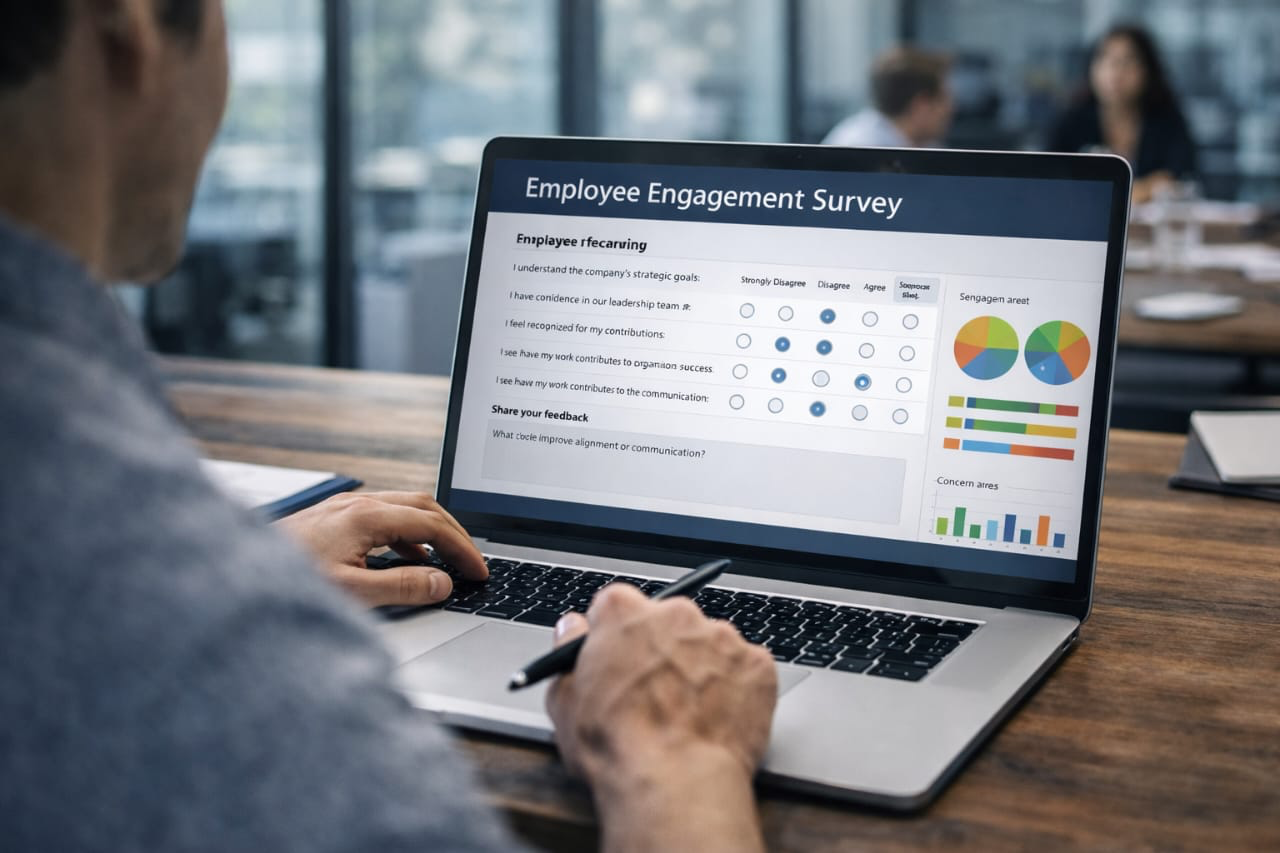
These employee engagement solutions allow organizations to gather feedback on topics such as:
- Leadership transparency
- Strategic clarity
- Workload distribution
- Collaboration between teams
When employees feel safe sharing feedback, the employee engagement survey becomes a reliable source of organizational intelligence. Without psychological safety, responses are filtered, and leaders end up acting on incomplete or misleading data.
Actionable Steps:
- Launch surveys across departments and locations
- Communicate the purpose of the survey clearly
- Ensure employee responses remain anonymous
Why It Matters:
Technology-enabled surveys allow leaders to collect honest feedback at scale. This visibility is critical because alignment issues rarely surface in performance metrics alone. Without accurate input from employees, leaders risk making decisions based on assumptions rather than reality.
Step 4: Analyze Survey Results to Identify Alignment Gaps
Collecting feedback is only the beginning. The real value of an employee survey lies in interpreting what employee responses reveal about organizational alignment.
Survey results often highlight patterns such as:
- Teams are unclear about company goals
- Employees are unsure about decision-making authority
- Departments interpreting priorities differently
- Managers communicate strategy inconsistently
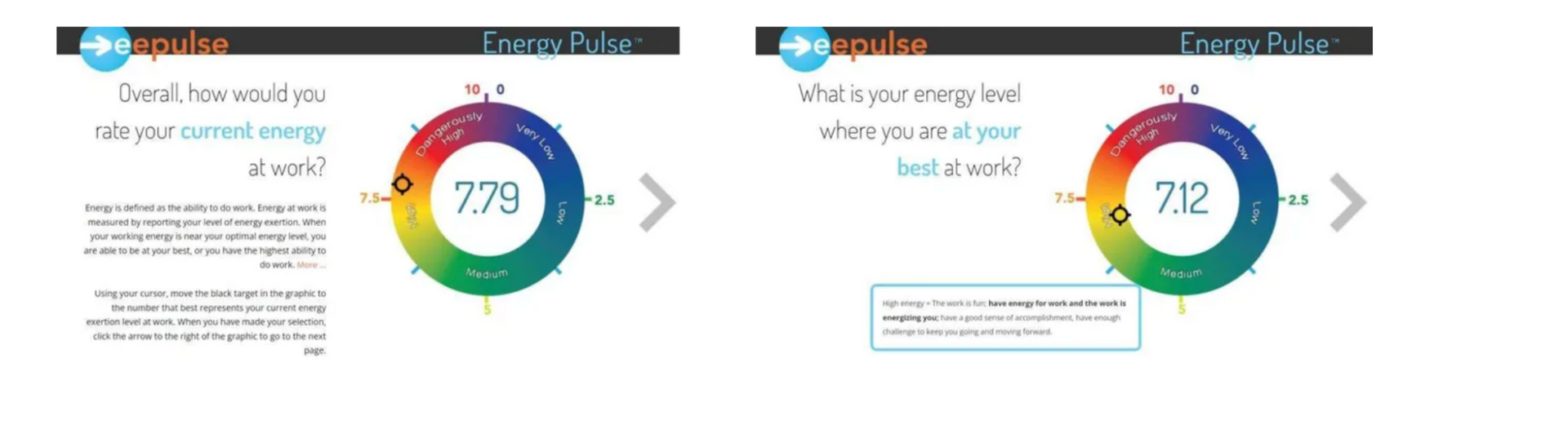
Using analytics features within modern employee engagement solutions, leaders can identify trends across teams, locations, and management levels. Advanced workforce engagement metrics help leadership teams better understand patterns in alignment, communication, and employee confidence.
Actionable Steps:
- Review survey results by department and manager
- Identify areas where clarity or alignment is low
- Highlight teams demonstrating strong strategic understanding
Why It Matters:
Analyzing employee engagement survey results helps organizations detect misalignment before it impacts performance. These patterns often explain why strategy stalls despite strong execution, highlighting where communication breaks down, ownership is unclear, or priorities are interpreted differently across teams.
Step 5: Translate Survey Insights into Leadership Action
An employee engagement survey only creates value when organizations act on the insights employees provide.
Leaders should review findings with managers and teams to identify improvement opportunities.
Organizations often focus on actions such as:
- Improving leadership communication
- Clarifying team objectives
- Aligning departmental goals with company strategy
However, the most effective organizations prioritize a few high-impact actions that remove the biggest barriers to alignment rather than attempting broad, unfocused changes.
Actionable Steps:
- Share survey insights transparently with leadership teams
- Encourage managers to discuss results with employees
- Implement improvements based on feedback
Why It Matters:
Employees quickly disengage when feedback does not lead to action. When organizations fail to act, surveys lose credibility and participation declines. Acting on insights not only strengthens trust but also ensures that alignment gaps are addressed before they affect performance and retention.
Step 6: Continuously Monitor Alignment Through Ongoing Surveys
Alignment is not a one-time achievement. As organizations grow, strategies evolve and teams expand. Running recurring employee engagement surveys allows leaders to track whether employees continue to understand company priorities and strategic direction.
Organizations that use modern survey platforms often run regular pulse surveys to monitor changes in employee sentiment and alignment over time. Platforms like eePulse help leadership teams track these trends and maintain visibility into employee feedback as organizational priorities evolve.
Actionable Steps:
- Run periodic engagement surveys to track alignment
- Monitor trends across teams and departments
- Adjust communication strategies based on survey insights
Why It Matters:
Continuous measurement ensures leaders stay connected to employee perspectives as priorities evolve. Without ongoing visibility, alignment erodes silently, especially during periods of growth, change, or restructuring. Regular feedback allows leaders to adjust quickly and keep teams moving in the same direction.

Turn Employee Feedback into Aligned Execution and Measurable Results
Closing the gap between strategy and execution is not about working harder. It is about working with clarity, alignment, and shared direction.
As organizations scale, misalignment becomes harder to detect. Teams interpret priorities differently. Communication gaps widen. Ownership weakens. Without visibility into how employees experience strategy, these issues remain hidden until they begin to affect performance.
This is why a structured, continuous approach to feedback is critical.
An employee engagement survey provides the foundation, but its true value lies in how insights are captured, interpreted, and acted upon. Leaders need more than surface-level engagement scores. They need a clear view into alignment, ownership, and execution barriers across teams.
This is where eePulse stands out.
Unlike traditional surveys that offer static snapshots, eePulse provides continuous, real-time insight into how teams think, feel, and perform. Its proprietary framework goes beyond engagement to measure:
- Energy – the momentum and urgency driving execution
- VALour – the sense of ownership, recognition, and accountability
- Direction – clarity around goals and alignment with company strategy
In addition, eePulse enables:
- Continuous pulse surveys instead of one-time assessments
- Customized employee engagement surveys aligned to organizational priorities
- Influence-based insights that highlight what is driving or blocking performance
- Action-oriented reporting that helps managers translate feedback into results
- Consulting support to ensure insights lead to meaningful change
This combination ensures that feedback does not remain data. It becomes action.
Organizations that invest in this level of visibility do more than improve engagement. They build teams that operate with clarity, move with purpose, and execute strategy with consistency.
Pro Tips: Dos and Don’ts
Dos
- Use an employee engagement survey to diagnose alignment, not just measure sentiment
- Focus questions on clarity, ownership, and decision-making, not satisfaction alone
- Prioritize a few high-impact actions that remove the biggest execution barriers
- Share insights transparently with managers to drive accountability and alignment
- Use ongoing feedback loops to track whether alignment improves over time
Don’ts
- Don’t rely on one-time surveys to assess long-term alignment
- Don’t measure engagement without linking it to business outcomes
- Don’t collect feedback without a clear action plan
- Don’t overwhelm teams with broad initiatives instead of focused improvements
- Don’t ignore patterns across teams, as they often reveal deeper execution gaps
Turn Survey Insights into Strategic Alignment
To close the gap between strategy and execution, organizations need to move beyond collecting feedback and focus on applying it with precision. Platforms like eepulse, among the best employee engagement survey tools, enable this shift by turning continuous feedback into clear, actionable insights.
Start by taking these focused actions:
- Review how you currently measure alignment and identify gaps in visibility
- Use an employee engagement survey to uncover how employees interpret company priorities
- Analyze feedback to pinpoint where execution is breaking down across teams
- Prioritize targeted actions that improve clarity, communication, and ownership
- Track alignment over time to ensure teams stay focused as strategies evolve
This keeps the mention contextual, positions the brand as an enabler, and integrates the keyword without breaking flow.
FAQs
Q1. Why do many organizations struggle to translate strategy into execution?
Often, employees are unclear about how their daily work connects to company priorities. When communication around goals is inconsistent, teams stay busy but may move in different directions. This is where employee engagement solutions play a critical role, helping organizations create visibility, align priorities, and ensure that day-to-day efforts are directly connected to strategic goals.
Q2. How can leaders detect misalignment across teams early?
Leaders need consistent visibility into how employees interpret company goals, leadership communication, and role expectations. The best employee engagement survey tools make this easier by capturing ongoing feedback, surfacing patterns, and highlighting areas where understanding begins to diverge. This continuous insight helps leaders identify and address alignment gaps early, before they start to affect performance.
Q3. What happens when employees do not clearly understand organizational priorities?
When priorities are unclear, employees may focus on tasks rather than outcomes. This can slow decision-making, reduce ownership, and weaken coordination between teams.
Q4. What qualities set the best employee engagement survey tools apart?
The best employee engagement survey tools stand out by offering real-time insights, intuitive dashboards, strong analytics, and clear action planning features. They go beyond collecting feedback to help leaders identify gaps, act quickly, and improve alignment, making them essential for building a responsive and high-performing workplace.
Strengthen Strategic Alignment and Execute with Clarity Using Employee Engagement Surveys
When used effectively, employee feedback becomes a powerful driver of alignment, helping organizations move from fragmented execution to focused performance.
- Employees interpret company priorities differently without clear alignment
- Teams stay busy but may drift away from strategic outcomes
- Communication gaps slow execution and weaken decision-making
- Lack of ownership reduces accountability and performance
- Continuous feedback reveals where alignment is breaking down across teams
Eliminate misalignment and accelerate execution with one of the best employee engagement survey tools in the industry.