
7 Signs Your Team Has Lost Energy and Urgency and How Employee Engagement Solutions Can Help
How to identify the warning signs when teams lose energy and urgency, and how employee engagement solutions help leaders rebuild engagement and momentum.
Most leaders don’t notice when urgency disappears.
There’s no sudden drop in productivity. No immediate missed deadlines. No dramatic resignations.
Instead, it happens quietly.
Meetings that once sparked ideas become routine updates. Employees complete tasks but stop pushing boundaries. Decisions that once took hours begin taking weeks.
On the surface, everything still looks fine but underneath, momentum is fading. And that’s where risk begins.
Recent organizational research on long-term firm survival shows that urgency is not just a performance trait, it's a survival factor. Companies that lose urgency, even while maintaining stability, are significantly more likely to experience long-term decline. The danger isn’t failure. The danger is slow drift.
This is exactly why employee energy matters.
Dr. Theresa M. Welbourne, founder and CEO of eePulse and pioneer behind the Energy Pulse™ and pulse survey methodology, has spent more than 25 years studying this dynamic. Her research identifies employee energy, defined as the ability to do work, as a leading predictor of performance, turnover, and organizational growth.
When urgency fades, energy follows. When energy declines, performance begins to erode. And by the time leaders notice, the pattern is often already embedded.
"Energy is defined as the ability to do work. Optimizing employee energy results in higher levels of individual, team, and organizational performance. Our energy metric predicts employee turnover and performance and is a fast method to track and act."
.Dr. Theresa M. Welbourne, eePulse
This is why modern employee engagement solutions have become critical. Annual engagement surveys capture a moment. They don’t capture the trend. And it’s the trend, the slow loss of urgency, that signals the greatest risk.
Below are seven early warning signs that your team may already be losing energy and urgency, along with what they look like in practice, why they matter, and how targeted employee engagement strategies can help restore momentum before performance declines.
A Quick Overview of the Warning Signs
- Work is getting done, but momentum feels slower
- Employees stop taking ownership of outcomes
- Teams are unclear about priorities
- Employees no longer feel valued for their contributions
- Fewer ideas and suggestions are shared
- Burnout starts affecting performance
- Engagement levels vary widely across teams
7 Signs Your Team May Need Stronger Employee Engagement Solutions
Loss of urgency rarely announces itself.
It shows up in small behavioral shifts; slower decisions, reduced ownership, fewer ideas, rising burnout. Individually, these signals may seem manageable. Together, they point to something more serious: a team that is gradually losing momentum.
Research consistently shows that organizations don’t fail because work stops. They struggle because energy and urgency quietly decline while output appears stable. By the time performance drops, the cultural shift has already taken hold.
This is why early detection matters.
Identifying these warning signs early allows leaders to apply the right employee engagement strategies before disengagement spreads across teams and slows organizational performance.
SIGN 1: Work Is Getting Done, But Momentum Feels Slower
What It Looks Like
Tasks are completed. Deadlines are hit. But something is off. Projects that used to move with urgency now drift. Decisions that once happened in a hallway conversation now require a meeting to be scheduled. The work output is technically adequate, but the pace and drive behind it have softened considerably.
In eePulse's VALour framework, built from large-scale research into the drivers of firm performance, urgency is identified as the single most differentiating variable between high-performing and underperforming teams. It is not enough for employees to feel valued or rewarded. When urgency fades, so does competitive performance.
Why It Matters
A slowdown in momentum rarely stays contained to one team. It spreads. When high-performers notice that a slowing pace is tolerated, they recalibrate their own effort. Over time, the organization moves at the speed of its least motivated employees rather than its most driven ones. Research consistently links this pattern to declining innovation output and increasing time-to-market.
Real-World Scenario
A regional financial services firm noticed its product development cycles had quietly stretched from six weeks to nearly four months over the course of a year. Nothing had changed in headcount or process, but pulse data from eePulse's Energy Pulse™ showed a sustained decline in team urgency scores across two departments. Leaders used that trend data to initiate targeted team conversations and reset accountability structures. Within one quarter, cycle times returned to baseline.
What Employee Engagement Solutions Can Do
eePulse's Energy Pulse™ tracks urgency as a measurable metric over time, not as a point-in-time snapshot. Trend data, not single readings, are what give leaders the ability to see a slowdown forming before it becomes embedded in team culture. The platform's frequent pulse cadence (monthly, bi-weekly, or weekly) makes slow energy declines visible while there is still time to course-correct.
SIGN 2: Employees Stop Taking Ownership of Outcomes
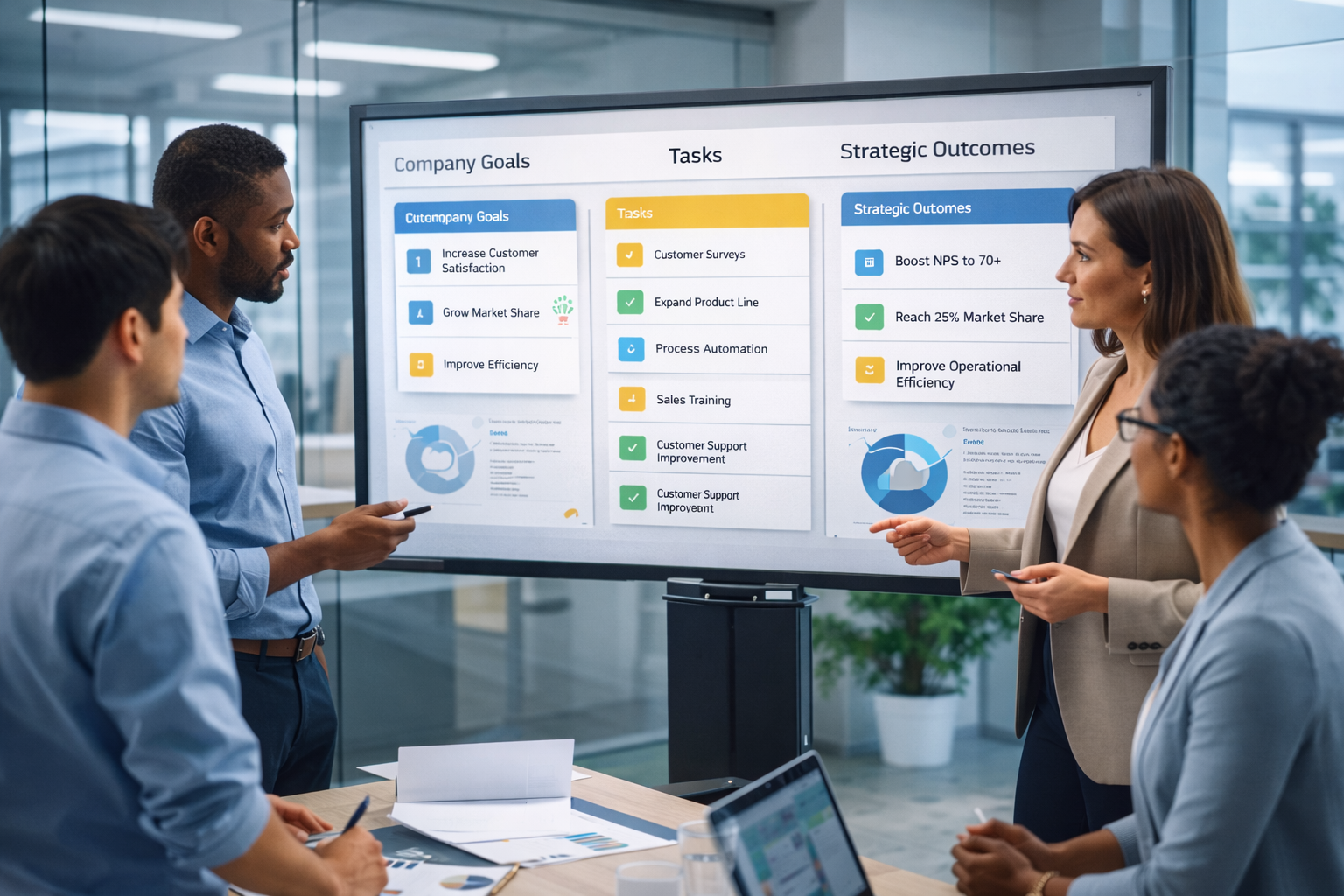
Employees complete what is assigned, but no longer take initiative on what is adjacent. Problems surface in meetings without anyone having tried to solve them first. When things go wrong, the instinct is to explain why it was not their responsibility rather than fix it. Accountability, the sense that "this outcome belongs to me", has quietly eroded.
eePulse's VALour metric measures ownership directly as one of its core variables. The "O" in VALour stands for ownership, the degree to which employees feel personally responsible for their work and the success of the team. When ownership scores decline in isolation, it typically signals a confidence problem. When they decline alongside urgency scores, it signals a deeper cultural shift.
Why It Matters
Organizations that lose employee ownership lose speed. Decisions escalate upward rather than being resolved at the point closest to the work. Managers become bottlenecks. Innovation slows because no one is willing to champion a new idea without explicit authorization. The cost of this dynamic compounds over time, especially in fast-moving industries.
Real-World Scenario
A mid-sized technology company implementing a new product launch process found that its cross-functional teams were consistently missing hand-off milestones — not because of capacity issues, but because each team assumed another team owned the critical path. When eePulse's VALour Pulse revealed low ownership scores specifically within cross-functional roles, leadership restructured accountability definitions and introduced visible recognition for individuals who stepped into ownership gaps. Milestone completion rates improved significantly within the next cycle.
What Employee Engagement Solutions Can Do
The VALour Pulse within eePulse's platform surfaces the balance between value (feeling recognized), ownership, urgency, and rewards, the four variables research identified as the strongest predictors of performance. Leaders can see not just whether ownership is low, but whether the issue is that employees don't feel empowered, don't understand their scope, or have been subtly trained by the environment to wait for direction.
SIGN 3: Teams Are Unclear About Priorities
What It Looks Like
When you ask team members what their top three priorities are this month, you get five different answers. People are busy, genuinely busy, but on things that may not connect to the most important organizational goals. Strategic initiatives launch with enthusiasm and then stall as day-to-day demands crowd out the work that actually moves the needle.
eePulse's Direction Pulse is specifically designed to measure this problem: whether employees understand their individual and team priorities, whether they understand the organization's strategy, and whether they can draw a clear line from their daily work to the company's direction.
Why It Matters
Misalignment is expensive. Teams expend enormous effort on work that has low strategic impact, while critical priorities go under-resourced. When employees cannot connect their work to a larger purpose, their sense of meaning at work declines, which directly affects engagement and energy. The Direction Pulse research shows that alignment clarity is one of the most actionable levers leaders have for improving engagement without large resource investments.
Real-World Scenario
A healthcare organization undergoing a digital transformation initiative deployed the Direction Pulse across its operations division. Results revealed that while senior leaders felt the strategy was clearly communicated, fewer than half of frontline employees could accurately describe how their team's current priorities connected to the transformation goals. Using that gap as a starting point, HR and department heads redesigned their strategy communication cadence, replacing quarterly all-hands updates with monthly team-level direction conversations. Employee alignment scores rose measurably in the following pulse cycle.
What Employee Engagement Solutions Can Do
eePulse's Direction Pulse gives HR leaders a segmented view of alignment across teams, levels, and departments. Rather than assuming a message has landed because it was sent, leaders get confirmation or a clear signal that it has not. This turns strategy communication from a broadcast activity into a feedback loop.
SIGN 4: Employees No Longer Feel Valued for Their Contributions

What It Looks Like
High performers start going quiet. They deliver their work, collect their feedback, and stop stretching. In exit interviews, the phrase "I did not feel my contributions were recognized" appears with striking regularity. Recognition programs exist on paper, but they are either too infrequent, too generic, or too disconnected from the actual work to have any real impact on how employees feel about their place in the organization.
The "VAL" in eePulse's VALour framework stands for "value," specifically the degree to which employees feel valued by both peers and managers. Dr. Welbourne's research showed that feeling valued is not just an emotional nicety; it is a measurable predictor of performance and retention. But it must be paired with urgency and ownership to drive full engagement. Value without urgency produces what the VALour model calls the "entitled" employee, comfortable but not committed.
Why It Matters
The cost of losing a high performer is well documented, typically estimated at between 50% and 200% of annual salary when accounting for recruitment, onboarding, and productivity loss. But the less discussed cost is the signal their departure sends to the remaining team. When high contributors leave, citing lack of recognition, the implicit message to those who stay is that strong performance does not lead to strong outcomes. That signal is corrosive.
Real-World Scenario
A professional services firm running on a high-performance culture noticed that its annual engagement survey continued to show high satisfaction scores, yet voluntary turnover among top-rated employees had increased two years in a row. When they deployed the VALour Pulse, the data showed a sharp disconnect: overall satisfaction was high, but value scores among the top-performing cohort were notably lower than among average performers. The firm introduced peer recognition mechanics tied to specific contributions and retargeted manager training toward recognizing effort in real time rather than only at performance reviews. Turnover in that cohort declined in the following 12 months.
What Employee Engagement Solutions Can Do
Because eePulse's VALour Pulse measures recognition and value as distinct dimensions, separate from compensation and job satisfaction, leaders can identify unrecognized pockets of the workforce before those employees decide to leave. The platform gives employees a voice through influence questions that surface what recognition looks like to them, not just what management assumes it should look like.
SIGN 5: Fewer Ideas and Suggestions Are Shared
What It Looks Like
Brainstorming sessions thin out. Both the physical and digital suggestion box goes unused. When leaders ask for feedback, the silence is polite but telling. Employees have ideas, but they no longer believe sharing them will lead anywhere. The informal idea-sharing that once happened spontaneously in hallways or Slack channels has disappeared.
This is one of the clearest behavioral signals that psychological safety within a team has declined. When employees stop contributing ideas, they are not being lazy, they are being rational. They have learned, through experience or observation, that the cost of speaking up outweighs the benefit.
Why It Matters
Innovation is not a strategy initiative. It is the output of people who feel safe enough and energized enough to contribute something new. Organizations that lose that dynamic don't suddenly stop innovating; they just find that their innovation increasingly comes from a shrinking pool of the same few contributors. The diversity of thinking that drives breakthrough ideas narrows. Competitive advantage erodes gradually.
Real-World Scenario
A consumer goods company with a well-funded innovation program was concerned that, despite significant investment in ideation workshops, the same 12 to 15 employees contributed the majority of ideas across the company. eePulse's Organizational Network Analysis, which identifies energy influencers within a workforce, revealed that the company's informal idea-sharing network had fragmented, and most employees were not connected to the nodes where ideas were being generated and validated. By identifying and empowering informal connectors across departments, the company expanded its active idea-contributor base by over 40% within six months.
What Employee Engagement Solutions Can Do
Beyond pulse surveys, eePulse's Organizational Network Analysis maps the informal energy and influence networks within an organization, identifying who the real connectors and motivators are, regardless of title. This allows HR leaders to strengthen the informal architecture of idea-sharing rather than simply adding more formal ideation programs.
SIGN 6: Burnout Starts Affecting Performance

What It Looks Like
It often begins with an increase in sick days or a decline in the quality of work that was previously reliable. Employees who were once engaged and communicative become withdrawn. Errors increase on routine tasks. People start doing the minimum necessary to get through the day. Unlike disengagement, which is often a choice, burnout is an energy state. The employee wants to perform well but no longer has the reserve to do so.
eePulse defines energy as the ability to do work, and burnout represents the depletion of that energy below a functional threshold. Dr. Welbourne's research distinguishes between "working energy," the level at which employees can perform their current responsibilities, and "optimal energy," the higher level state required for innovation, collaboration, and growth. Burnout is what happens when working energy falls below the sustainable baseline.
Why It Matters
Burnout is not a personal failure. It is an organizational signal. When it appears in one team, it often indicates systemic issues such as workload distribution, leadership style, unclear expectations, or chronic under-resourcing that will affect adjacent teams if left unaddressed. The World Health Organization classifies burnout as an occupational phenomenon, not merely individual stress. Organizations that treat it as a personal issue rather than a structural one consistently find that their burnout rates do not improve.
Real-World Scenario
A logistics company saw a spike in turnover after a major systems migration, with exit interviews citing exhaustion. When they implemented eePulse’s Daily Energy Pulse, leaders found energy had been declining for 10 weeks before the spike. The warning signs were there, but not visible. The company now uses the tool during major change events as an early warning system.
What Employee Engagement Solutions Can Do
eePulse's Daily Energy Pulse is designed precisely for these high-pressure moments, such as system migrations, organizational restructuring, return to office transitions, or any period of concentrated change. It provides high-frequency, low-burden feedback that gives managers a real-time read on energy depletion before it reaches the point of burnout and resignation.
SIGN 7: Engagement Levels Vary Widely Across Teams
What It Looks Like
Your organization's overall engagement score looks acceptable, maybe even good. But when you look at team-level data, the picture fragments. One department is thriving. Two others are struggling. A third sits somewhere in between but trending in the wrong direction. The average masks the variance, and the variance is where the real risk lives.
This pattern is extremely common in organizations that rely on annual surveys or aggregate engagement scores as their primary diagnostic tool. High-performing teams can inflate an overall score while struggling teams remain invisible until the problem surfaces as turnover or a performance failure.
Why It Matters
Engagement variance across teams is often a leadership problem, not an employee problem. When two teams doing similar work in the same organization have dramatically different engagement levels, the most likely explanatory variable is the manager, not the work. Identifying those gaps early allows HR leaders to target development resources, coaching, and support where they will have the most impact — rather than rolling out company-wide programs that solve the wrong problem in the wrong places.
Real-World Scenario
A large insurance company deployed company-wide pulse surveys, expecting to identify its lowest-engagement business unit. Instead, the data revealed that its highest-variance engagement scores existed within its highest-performing business unit, where three teams were strongly engaged, and two were significantly below baseline. Digging further, HR identified that the two low-engagement teams shared a common manager who had recently been promoted into a leadership role without adequate support. A targeted coaching intervention for that manager, combined with a restructured 1:1 cadence, brought both teams' scores to within range of their peers within two pulse cycles.
What Employee Engagement Solutions Can Do
eePulse's customized reporting provides team-level segmentation that makes variance visible rather than averaged away. Leaders can benchmark team performance not just against company norms but against industry data from the Leadership Pulse™ program, eePulse's 20-year global benchmarking initiative run in partnership with the Center for Effective Organizations at the University of Southern California's Marshall School of Business.
Strengthen Team Momentum with Modern Employee Engagement Solutions
Loss of urgency rarely happens overnight. It begins with subtle signals, reduced initiative, fewer ideas in meetings, declining recognition, or growing burnout, that individually might seem unremarkable. Together, they trace the outline of a team that is slowly disengaging.
The problem with traditional annual engagement surveys is structural. By the time the data is collected, analyzed, and acted upon, months have passed. The trends that could have informed a timely intervention are already history. Dr. Welbourne's foundational research on the pulse survey, which she pioneered in the 1990s, demonstrated that trend data, not point-in-time data, is what gives organizations the ability to manage human energy proactively rather than reactively.
eePulse's employee engagement solutions are built around that insight. The platform's suite of tools, Energy Pulse™, VALour Pulse, Direction Pulse, and Daily Energy Pulse, gives leaders continuous visibility into the dimensions of engagement that most directly predict performance: energy, urgency, ownership, alignment, and recognition.
How eePulse Employee Engagement Solutions Turn Insight into Stronger Team Performance

| Challenge | eePulse Solution | Benefit | Tool |
|---|---|---|---|
| Leaders sense declining energy but lack visibility | Energy Pulse™ tracks real-time energy trends across teams | Early warning before productivity drops | Energy Metric |
| Employees feel disconnected from goals | Direction Pulse measures alignment with org strategy | Stronger strategic alignment across all levels | Direction Pulse |
| Employees feel undervalued or unrecognized | VALour Pulse tracks value, ownership, and recognition | Higher motivation and reduced turnover risk | VALour Metric |
| Burnout silently affecting key projects | Continuous sentiment tracking highlights workload pressure | Faster intervention before performance suffers | Daily Energy Pulse |
| Engagement gaps vary widely across teams | Customized team-level reporting and benchmarking | Clear visibility to target action where it matters most | All Pulses |
Transform your team's energy and urgency today by exploring tailored employee engagement solutions.
Contact Us!
At a glance:-
This article identifies seven early warning signs of declining team engagement and shows how targeted employee engagement solutions, grounded in over 25 years of research by Dr. Theresa M. Welbourne, can help leaders rebuild energy, ownership, and momentum.
- Spot slowing momentum early by tracking team energy trends
- Use VALour metrics to identify loss of ownership
- Deploy Direction Pulse to close strategy understanding gaps
- Track recognition as a measurable driver of retention
- Map idea sharing to uncover collaboration breakdowns
- Use Daily Energy Pulse to detect burnout early
- Segment engagement data by team to reveal variance
FAQs
Q1. What makes eePulse's approach different from standard engagement survey tools?
eePulse's methodology is grounded in Dr. Theresa M. Welbourne's academic research on the predictive power of trending human energy. Rather than measuring general satisfaction, eePulse tracks specific performance-linked dimensions, energy, urgency, ownership, value, and direction, which research has shown to predict turnover, innovation output, and firm performance. The platform provides employees with their own personalized energy reports, not just aggregate scores for management, making it genuinely employee-centric.
Q2. Are employee engagement strategies difficult to implement in mid-sized organizations?
Not with the right tools. Many of the most impactful employee engagement strategies start with simple, high-frequency feedback loops rather than large structural changes. eePulse's pulse approach is specifically designed to be low-burden for employees while generating high-value trend data for leaders. The platform is scalable from small teams to global enterprises.
Q3. Can employee engagement solutions really prevent employee burnout?
Yes, but only if they provide data frequently enough to detect the trend before it reaches a critical point. Annual or even quarterly surveys typically miss the window for early intervention. eePulse's Daily Energy Pulse and regular Energy Pulse™ cadence give leaders visibility into workload pressure and energy depletion as it is happening. This enables timely action rather than post-burnout recovery.
Reignite Team Energy with Better Employee Engagement Solutions
Recognizing these warning signs early helps leaders address disengagement before it impacts performance, retention, or client outcomes. eePulse's employee engagement solutions give HR leaders and CHROs the visibility and tools to shift from reactive to proactive engagement management.
- Slowing momentum signals declining urgency
- Loss of ownership weakens accountability
- Unclear priorities stall critical work
- Lack of recognition drives quiet disengagement
- Reduced idea sharing signals broken collaboration
- Burnout reflects structural issues
- Team-level variance reveals leadership gaps
Improve Team Engagement Today.