
6 Leading Indicators of Employee Performance Every Leader Should Track
Learn how employee energy, leadership confidence, and organizational readiness influence employee performance long before traditional metrics reveal a problem.
Keep reading to discover the leading indicators of employee performance.
Employee performance doesn't decline overnight. Long before productivity drops, deadlines slip, or turnover increases, organizations often miss early warning signs.
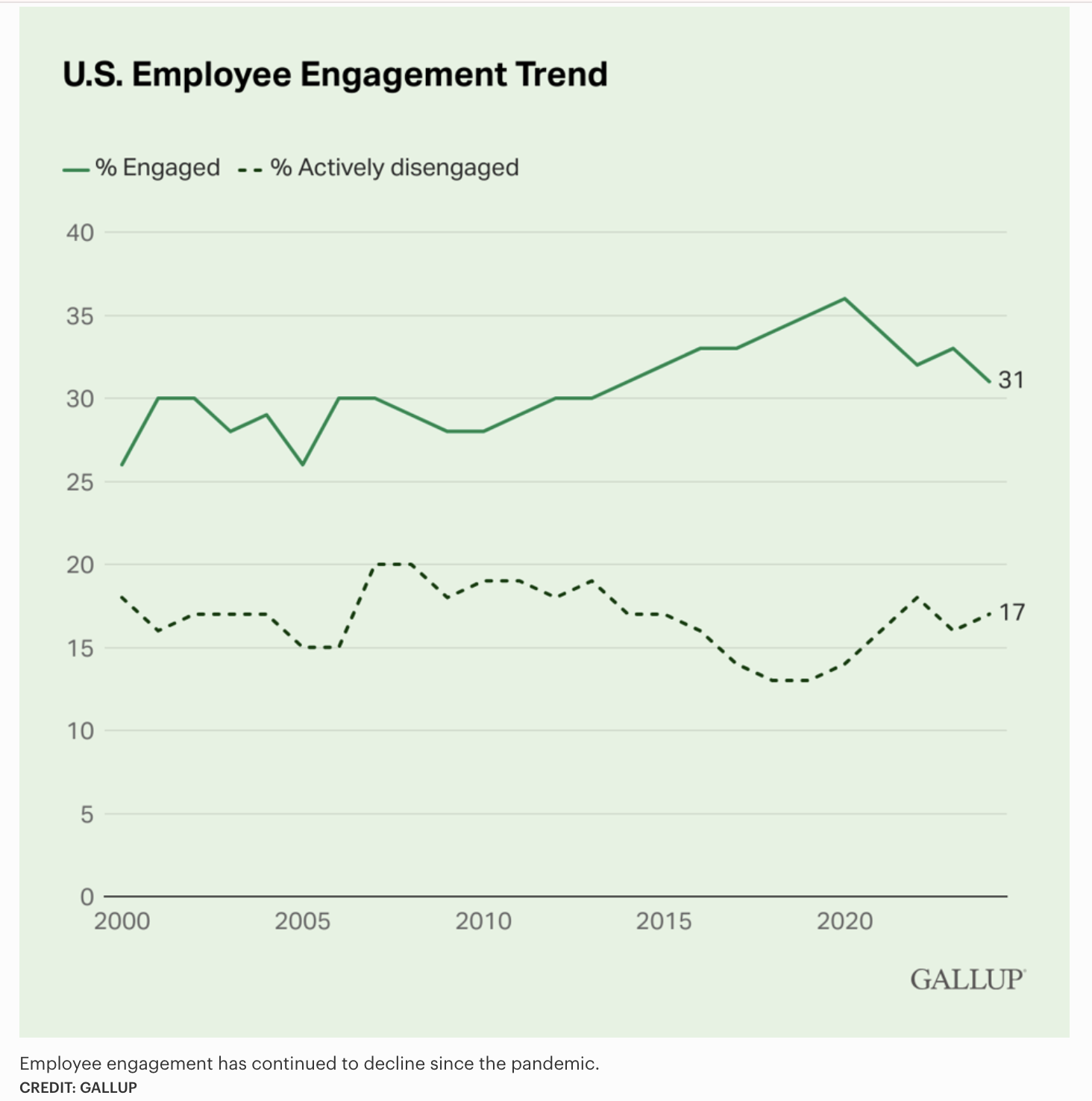
Recent Gallup research found that employee engagement in the U.S. fell to 31% in 2024, its lowest level in a decade. At the same time, actively disengaged employees reached 17%, highlighting growing workforce detachment and uncertainty.
For leaders, these trends raise an important question: What indicators should organizations be monitoring before performance suffers?
The answer often lies in factors that traditional performance metrics fail to capture. Employee energy, leadership confidence, and organizational readiness frequently shift before declines in productivity, collaboration, innovation, and retention become visible.
Organizations that focus only on lagging indicators often discover problems after business outcomes have already been affected. Those that monitor leading indicators gain earlier visibility into emerging risks and greater opportunities to strengthen employee performance before challenges escalate.
Why Employee Performance Doesn't Decline Overnight
Employee performance rarely declines overnight. In most cases, performance challenges emerge after gradual changes in workforce conditions such as role clarity, leadership support, and development opportunities. Long before productivity metrics reveal a problem, employees often begin experiencing uncertainty, reduced confidence, and lower energy levels.
Gallup's 2024 research highlights this pattern. Only 46% of employees clearly know what is expected of them at work, down 10 percentage points from 2020. Similarly, just 30% strongly agree that someone encourages their development.
When employees lack clarity, support, and growth opportunities, performance challenges often follow.
What Are the Leading Indicators of Employee Performance?
Leading indicators of employee performance are workforce signals that help organizations identify potential performance risks before they appear in productivity, quality, retention, or financial results. Unlike lagging indicators, which measure outcomes after they occur, leading indicators provide early visibility into the conditions that influence future success.
Employee energy, leadership confidence, organizational readiness, alignment, workforce feedback trends, and burnout risk are all leading indicators that can signal future performance challenges before they appear in business metrics. Among these, employee energy, leadership confidence, and organizational readiness are particularly important because they directly influence how teams perform, adapt to change, and execute organizational priorities. Organizations that monitor these factors can identify risks earlier and take action before employee performance declines.
| Lagging Indicators | Leading Indicators |
|---|---|
| Productivity declines | Employee energy drops |
| Missed deadlines | Leadership confidence falls |
| Increased turnover | Burnout risk rises |
| Change initiative failure | Organizational readiness weakens |
| Lower customer satisfaction | Alignment deteriorates |
6 Leading Indicators of Employee Performance Leaders Should Monitor
Here are the six leading indicators every leader should track.
- Employee Energy Begins to Decline
- Leadership Confidence Starts Eroding
- Organizational Readiness Falls During Change
- Alignment With Organizational Direction Weakens
- Workforce Feedback Trends Become Increasingly Negative
- Burnout Risk Begins to Increase

1. Employee Energy Begins to Decline
What It Is
Employee energy reflects the level of enthusiasm, focus, resilience, and commitment employees bring to their work each day. High-energy employees are more likely to take initiative, solve problems proactively, collaborate effectively, and contribute beyond their core responsibilities.
When employee energy begins to decline, the change is often subtle. Employees may continue meeting expectations and maintaining productivity, but their motivation, creativity, and willingness to go the extra mile gradually decrease. Because these shifts occur before traditional performance metrics change, declining energy is often one of the earliest indicators of future performance challenges.
Why It Matters
- Lower energy reduces productivity and slows day-to-day execution.
- Teams become less innovative when enthusiasm and initiative decline.
- Employee performance often weakens before managers notice visible changes.
- Declining energy can negatively influence team morale and collaboration.
- Sustained low energy increases burnout and turnover risk over time.
Pro Tip
Monitor employee energy trends consistently rather than relying on annual surveys or performance reviews. Regular workforce feedback can help leaders identify declining energy early, understand underlying causes, and take action before employee performance begins to suffer.
2. Leadership Confidence Starts Eroding
What It Is
Leadership confidence reflects employees' trust in organizational leaders, their decisions, and the direction they set for the business. When employees have confidence in leadership, they are more likely to remain committed, embrace change, and align their efforts with organizational goals.
When leadership confidence begins to erode, uncertainty often follows. Employees may question strategic decisions, become skeptical of leadership communication, or feel disconnected from the organization's priorities. Over time, this lack of confidence can affect motivation, accountability, and overall employee performance.
Why It Matters
- Trust in leadership influences employee commitment and workplace confidence.
- Lower confidence can reduce engagement during organizational change initiatives.
- Employees become less aligned with strategic priorities and goals.
- Uncertainty often weakens decision-making, accountability, and collaboration.
- Leadership credibility directly impacts organizational culture and performance.
Pro Tip
Measure leadership confidence regularly through targeted employee feedback. Declining confidence often appears before visible performance issues emerge, allowing leaders to improve communication, clarify priorities, and rebuild trust before organizational effectiveness is affected.
3. Organizational Readiness Falls During Change
What It Is
Organizational readiness reflects how prepared employees and teams are to adapt to new priorities, processes, technologies, and strategic initiatives. In today's workplace, organizations face constant change, making readiness a critical factor in maintaining employee performance and business momentum.
When organizational readiness declines, employees may feel overwhelmed, uncertain, or resistant to change. They may lack clarity around expectations, question the purpose of new initiatives, or struggle to adapt to shifting demands. These challenges often emerge before project delays, performance issues, or change failures become visible, making readiness an important leading indicator for leaders to monitor.
Why It Matters
- Low readiness slows the adoption of new processes and initiatives.
- Employees struggle to adapt when expectations remain unclear.
- Resistance to change can delay critical business objectives.
- Organizational agility declines when readiness levels begin falling.
- Performance suffers when teams lack confidence during transitions.
Pro Tip
Assess organizational readiness before and during major change initiatives. Gathering employee feedback on preparedness, communication, and support helps leaders identify barriers early and improve adoption rates before performance and productivity are affected.

4. Alignment With Organizational Direction Weakens
What It Is
Alignment occurs when employees understand the organization's goals, priorities, and vision for the future. Employees who see how their work contributes to broader business objectives are typically more focused, motivated, and committed to achieving results.
When alignment weakens, employees may become uncertain about priorities or disconnected from organizational goals. Teams can begin moving in different directions, creating confusion around decision-making and resource allocation. Over time, this lack of clarity can reduce employee performance and make it more difficult for organizations to execute strategic plans effectively.
Why It Matters
- Clear alignment helps employees prioritize work more effectively.
- Confusion around goals often reduces productivity and accountability.
- Misaligned teams struggle to execute strategies consistently.
- Employees lose motivation when organizational direction feels unclear.
- Strategic initiatives become harder to implement and sustain.
Pro Tip
Regularly communicate organizational goals and explain how individual roles contribute to business success. Employees are more likely to maintain strong performance when they understand where the organization is headed and how their work supports that direction.
5. Workforce Feedback Trends Become Increasingly Negative
What It Is
Workforce feedback provides valuable insight into employee experiences, perceptions, and concerns across the organization. While individual comments may not always indicate a problem, recurring themes and negative trends can reveal emerging risks before they affect business outcomes.
When employees consistently report concerns about communication, leadership, workload, recognition, or collaboration, those patterns often signal deeper organizational challenges. Monitoring workforce feedback trends allows leaders to identify issues early, understand root causes, and take action before employee performance, morale, or retention are impacted.
Why It Matters
- Feedback trends reveal risks before traditional metrics detect issues.
- Leaders gain visibility into emerging workforce concerns quickly.
- Recurring concerns can indicate deeper organizational performance challenges.
- Early insights support faster and more effective interventions.
- Employee trust improves when feedback leads to visible action.
Pro Tip
Look beyond individual survey responses and focus on trends over time. Consistent shifts in workforce sentiment often provide stronger insights than isolated comments, helping leaders identify organizational risks before they begin affecting performance.
6. Burnout Risk Begins to Increase

What It Is
Burnout occurs when employees experience prolonged stress, excessive workloads, and insufficient opportunities for recovery. While occasional periods of pressure are common, sustained demands can gradually reduce employees' capacity to perform at their best.
As burnout risk increases, employees may experience lower energy, reduced focus, decreased resilience, and declining job satisfaction. These effects often develop gradually, making burnout difficult to detect through traditional performance measures alone. Left unaddressed, burnout can significantly impact employee performance, well-being, and organizational effectiveness.
Why It Matters
- Burnout reduces focus, resilience, and overall employee performance.
- Prolonged stress increases absenteeism and workforce disruption risks.
- Employee well-being directly affects productivity and decision quality.
- High burnout levels contribute to turnover and retention challenges.
- Teams become less collaborative when stress remains unmanaged.
Pro Tip
Track workload pressures, employee energy levels, and well-being trends regularly. Burnout rarely appears suddenly, and organizations that identify warning signs early can provide support before employee performance and workforce health begin to decline.
How eePulse Helps Organizations Identify Performance Risks Early

Recognizing the leading indicators of employee performance is only the first step. The real challenge is measuring these signals consistently and turning workforce feedback into meaningful action.
Many organizations still rely on annual surveys, performance reviews, or productivity metrics to understand workforce challenges. While these tools provide valuable information, they often reveal problems after employee performance, retention, or business outcomes have already been affected.
eePulse combines customized pulse surveys, proprietary Energy, VALour, and Direction metrics, influence questions, tailored reporting, and consultative guidance to help leaders understand the workforce conditions driving employee performance.
Together, these tools provide leaders with continuous visibility into the factors that influence employee performance, including workforce energy, leadership confidence, organizational alignment, ownership, recognition, and burnout risk.
Instead of relying on generic engagement scores, eePulse helps organizations understand why performance may be improving or declining. Leaders gain actionable insights into where energy is falling, where employees lack confidence, and where teams may be struggling to adapt to change.
Turning Workforce Insights Into Better Employee Performance
| Leading Indicator | What It Reveals | How eePulse Helps |
|---|---|---|
| Employee Energy | Declining motivation, urgency, and discretionary effort before performance issues emerge. | Measures workforce energy trends through pulse surveys, helping leaders identify where momentum is rising or falling. |
| Leadership Confidence | Employee trust in leadership decisions, communication, and organizational direction. | Captures confidence levels through targeted feedback, enabling leaders to address concerns before they affect performance. |
| Organizational Readiness | How prepared employees are to adapt to change, new priorities, and transformation initiatives. | Identifies readiness gaps and barriers to change adoption across teams, departments, and locations. |
| Organizational Alignment | Whether employees understand the company goals and how their work contributes to them. | Uses Direction metrics to measure alignment and highlight areas requiring greater clarity or communication. |
| Workforce Feedback Trends | Emerging concerns related to communication, workload, recognition, or collaboration. | Tracks feedback patterns over time and surfaces actionable insights through customized reporting. |
| Burnout Risk | Early signs of stress, fatigue, and reduced workforce capacity. | Monitors employee energy and sentiment to help leaders identify burnout risks before they impact outcomes. |
Measure employee energy, leadership confidence, and organizational readiness before they impact employee performance and business results. eePulse helps leaders turn workforce insights into action.
Book a Free Demo with eePulse!
Summary At a Glance
- Employee performance is a result of underlying workforce conditions.
- Employee energy often declines before performance does.
- Leadership confidence influences trust, alignment, and execution.
- Organizational readiness determines how well teams adapt to change.
- Misalignment can reduce focus and productivity.
- Workforce feedback reveals risks before business metrics.
- Burnout is a leading indicator of performance challenges.
- Early insights help leaders take action before results suffer.
Frequently Asked Questions
1. How can I identify employee performance problems before productivity declines?
Employee performance challenges often appear long before productivity metrics change. Monitoring leading indicators such as employee energy, leadership confidence, organizational readiness, workforce feedback, and burnout risk can help leaders identify emerging issues early and take corrective action before business results are affected.
2. Can employee performance decline even when employees appear productive?
Yes. Employees can continue meeting deadlines and completing tasks while experiencing lower energy, reduced motivation, or declining confidence in leadership. Because employee performance is influenced by underlying workforce conditions, early warning signs may not be immediately visible in traditional productivity measures.
3. What is the relationship between leadership confidence and employee performance?
Leadership confidence plays a significant role in employee performance. When employees trust leadership decisions and understand organizational priorities, they are more likely to stay aligned, focused, and committed to achieving goals. Low leadership confidence can create uncertainty, weaken accountability, and negatively affect performance over time.
4. How do I measure organizational readiness before a major change initiative?
Organizational readiness can be measured through employee feedback, pulse surveys, and assessments that evaluate understanding, preparedness, confidence, and support for upcoming changes. Measuring organizational readiness before a major initiative helps leaders identify potential barriers, improve communication, and increase the likelihood of successful execution while protecting employee performance.
Improve Employee Performance Before Results Decline
Employee performance is often influenced by factors that traditional metrics fail to capture. eePulse helps organizations measure employee energy, leadership confidence, and organizational readiness to identify risks early and strengthen workforce performance.
- Real-time visibility into workforce energy and momentum
- Insights into leadership confidence and organizational alignment
- Early detection of burnout and performance risks
- Greater organizational readiness during change initiatives
- Customized reporting and actionable recommendations
- Continuous workforce feedback that supports better decisions
Turn workforce intelligence into actions that improve employee performance and support long-term business success.